
 Uncategorized
Most travelers think finding a sloth in the wild is purely a matter of luck, but in reality, it’s a matter of strategy. Whether you’re exploring dense rainforests or navigating biodiverse waterways, successful wildlife spotting panama city depends on knowing exactly where to look. You don’t want to spend your vacation staring at empty branches or worrying if your tour is truly ethical. It’s frustrating to invest your time and money only to leave without that perfect photo of a capuchin monkey or a sleepy three-toed sloth.
At Burba Travel, we understand that you want a seamless, educational experience that respects Panama’s incredible biodiversity. This 2026 guide will show you how to navigate the latest environmental guidelines, like those in protected areas, while choosing the right adventure for your goals. You’ll learn the key differences between boat-based tours and rainforest hikes so you can book with confidence. We’ll walk you through prime locations for sightings, from accessible wildlife havens to the deep jungle, ensuring your journey is both professional and deeply personal.
Key Takeaways
- Learn why Panama City is a unique biological bridge where primary rainforest grows right alongside a modern metropolis.
- Identify the “Big Three” iconic species and learn the specific behaviors that will help you spot them in the canopy.
- Compare the advantages of boat-based adventures versus rainforest hiking to maximize your chances for successful wildlife spotting panama city.
- Use our 5-step buying guide to evaluate tour operators and understand why early departures are essential for active sightings.
- Discover how to secure a seamless experience with professional guides who handle all transportation and logistics from your hotel.
Why Panama’s Capital is a Global Wildlife Hub in 2026
Panama City isn’t just a financial center; it’s a living, breathing urban jungle. Imagine standing on a skyscraper balcony and seeing a primary rainforest just a few miles away. This proximity is rare. In 2026, the city has solidified its reputation as a premier destination for nature lovers. Recent conservation efforts have protected the lush borders of the Panama Canal, ensuring that animals have a safe passage between North and South America. It’s the ultimate spot for wildlife spotting panama city because you don’t have to travel for days to find the wild. You can leave your hotel after breakfast and be deep in the jungle before lunch. The 2026 travel season has already seen a 17.3% increase in international visitors, many of whom come specifically for these unique green spaces.
The Biological Corridor: Nature at the Canal’s Edge
The interoceanic canal does more than move ships; it acts as a vital biological corridor. Gatun Lake is the heart of this system. Its freshwater islands provide a sanctuary for species that would otherwise struggle in a developing world. You can transition from the modern skyline to a dense canopy in under 45 minutes. It’s a fast-paced shift that feels like time travel. Nearby, Soberania National Park stands as a national treasure. It’s world-famous for birdwatching, but it also hosts a comprehensive list of mammals in Panama, including coatis and tamanduas. This corridor ensures that biodiversity remains high even as the city grows. It’s a place where the sounds of the city fade, replaced by the calls of howler monkeys and tropical birds.
Sustainable Tourism: Watching Wildlife Responsibly
Protecting this hub requires a commitment to ethical tourism. In 2026, the standards for wildlife spotting panama city are clearer than ever. Responsible travel helps maintain the delicate balance of the ecosystem. We strictly follow these updated 2026 guidelines:
- No Single-Use Plastics: A total ban on plastics and polystyrene is now enforced in all national parks to protect habitats.
- No Feeding: We never offer food to animals to ensure they remain wild and hunt naturally.
- Quiet Observation: We maintain a respectful distance to avoid causing stress to the species we encounter.
Choosing a licensed operator is a direct way to support national conservation programs. At Burba Travel, we prioritize low-impact excursions. Our Monkey Island Tour and Panama Canal Tour are designed to give you an up-close view without leaving a heavy footprint. We want these animals to thrive for generations. We keep our groups small and our presence quiet. By booking with us, you aren’t just seeing the sights; you’re actively contributing to the preservation of Panama’s natural heritage.
Must-See Species: The 2026 Wildlife Checklist
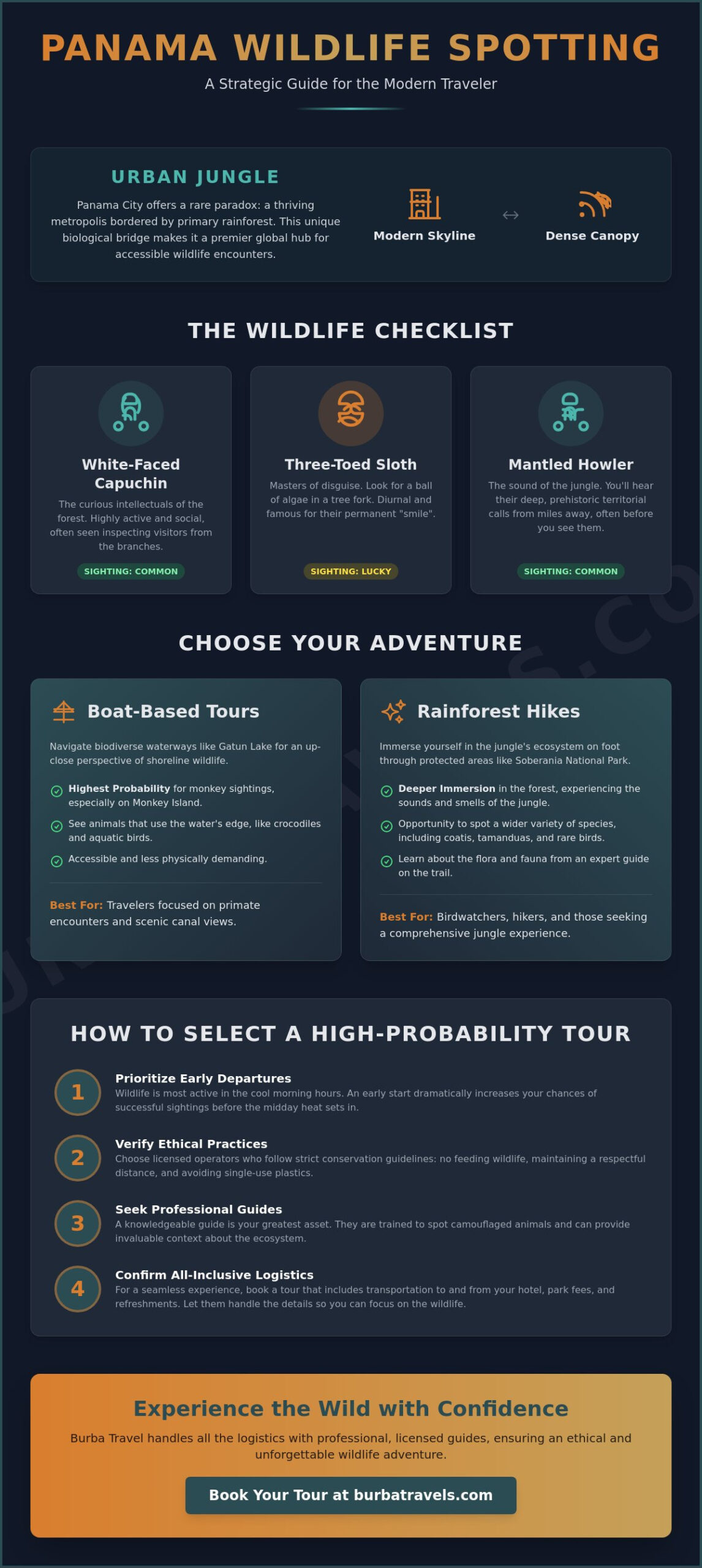
Close your eyes for a moment and listen. The jungle isn’t quiet. It’s a symphony of high-pitched whistles, rustling leaves, and the unmistakable, prehistoric roar of a howler monkey. When you’re out for wildlife spotting panama city, your ears often find the animals before your eyes do. In 2026, the biodiversity near the capital remains staggering, but you need to know what to look for. Some species are daily regulars, while others require a bit of patience and a keen eye. Use this rarity scale to manage your expectations: howler monkeys and iguanas are “Common” sights, while spotting a three-toed sloth or an American crocodile is a “Lucky” win for any traveler.
The Primates: Capuchins, Howlers, and Tamarins
The monkeys are the undisputed stars of the show. White-faced Capuchins are the intellectuals of the forest. They’re curious, highly active, and often peer down from the branches to inspect visitors. If you want to see these primates up close, our Monkey Island Tour is the most reliable way to fill your camera roll. In contrast, Mantled Howler Monkeys are the heavyweights of sound. You’ll hear their deep, guttural territorial calls from miles away. Finally, keep a lookout for Geoffroy’s Tamarin. These tiny, red-naped primates are endemic to the region and move with lightning speed through the mid-canopy.
The Slow Stars: Two-Toed and Three-Toed Sloths
Spotting a sloth is the highlight of any trip, but they’re masters of disguise. To find them, look for what looks like a ball of wet algae or a clump of dead leaves stuck in a tree fork. The Three-toed sloth is the one you see in most photos, famous for its permanent “smile” and dark eye mask. They’re strictly diurnal, meaning they move during the day. The Two-toed sloth is slightly larger and more nocturnal, often found sleeping high in the cecropia trees. Organizations like Panama Wildlife Conservation work tirelessly to protect these habitats, ensuring sloths have the corridors they need to survive. Pro tip: bring high-quality binoculars and look for movement during the cooler morning hours.
Exotic Birds and Reptiles
The canopy is also home to the Keel-billed Toucan, often called the “flying banana” because of its massive, colorful beak. They usually travel in small groups, so if you see one, look nearby for its friends. On the ground and in the water, the predators take over. Green Iguanas love to sunbathe on branches overhanging the water, while the Basilisk Lizard, or “Jesus Christ Lizard,” can actually run across the water’s surface when startled. Along the muddy banks of Gatun Lake, you might even spot the armored back of an American crocodile. These giants can grow quite large, and seeing them glide silently through the water is a powerful reminder of Panama’s raw, natural beauty.
Comparing the Best Hubs: Gatun Lake vs. Rainforest Trails
Deciding where to go for wildlife spotting panama city often comes down to one simple question: do you want to be on the water or under the canopy? Both environments offer incredible biodiversity, but the way you find and photograph animals is completely different. One isn’t necessarily better than the other, but they serve different travel styles. Gatun Lake provides a breezy, panoramic view of the shoreline, while the trails of Soberanía National Park offer a deep, immersive trek into the heart of the jungle. Your choice depends on your physical comfort, your photography goals, and how much you’re willing to sweat in the tropical heat.
Gatun Lake & Monkey Island: The Water Adventure
If you want close encounters without a heavy hike, the water is your best bet. A boat-based tour allows you to glide right up to the edge of the forest where primates often congregate. You get a clear, unobstructed line of sight. This is perfect for capturing high-quality photos of capuchins and tamarins without branches blocking your shot. Navigating the Panama Canal shipping lanes adds an extra layer of excitement as you pass massive container ships on your way to the quiet inlets. Our Monkey Island Tour is specifically designed for these high-probability sightings. It’s an ideal choice for families with young children or travelers with limited mobility. The lake breeze keeps the temperature manageable, making it a much more accessible way to experience the wild.
Pipeline Road & Soberania: The Hiker’s Choice
Serious naturalists and bird enthusiasts usually head for the trails. Pipeline Road is legendary among the global scientific community. It has consistently set world records for bird counts in a 24-hour period. The research conducted by the Smithsonian Tropical Research Institute highlights just how complex and vital these ecosystems are for regional biodiversity. Walking under the primary rainforest canopy is a total sensory experience. You’ll feel the rising humidity and smell the damp earth. It’s a slower process than a boat tour. You have to look harder and move quieter to find what you’re looking for. This is where you’ll find the more elusive forest dwellers like trogons, coatis, and anteaters. It requires more physical effort and a high tolerance for humidity. If you enjoy the challenge of the hunt and the reward of a rare sighting, the trails will not disappoint. Just remember that as of 2026, single-use plastics are banned in these protected areas, so bring a reusable bottle for your trek.
Photography on the trails can be tricky due to the low light under the thick canopy. You’ll need a steady hand or a tripod to capture the vibrant colors of the birds. In contrast, the lake offers bright, natural light that is much more forgiving for amateur photographers. Think about your gear and your patience level before you choose your hub. Whether you prefer the cool spray of the lake or the quiet rustle of the forest floor, Panama City delivers a world-class nature experience just minutes from the city center.
Buying Guide: How to Select a High-Probability Wildlife Tour
Booking a tour shouldn’t feel like a gamble. While nature is unpredictable, your choice of operator shouldn’t be. To maximize your chances for wildlife spotting panama city, you need to look beyond the brochure. High-probability sightings are the result of expert timing, quality equipment, and small group sizes. If you’re stuck on a boat with 30 other people, the noise alone will drive the animals deeper into the brush. Look for tours that prioritize your experience over volume. Use this 5-step checklist to evaluate any operator before you hand over your credit card:
- Check the Clock: Does the tour offer departures before 8:00 AM?
- Verify Group Size: Are groups limited to 10 people or fewer?
- Ask About Gear: Does the guide provide a high-powered spotting scope?
- Confirm the Guide’s Role: Is your guide a certified naturalist or just a boat captain?
- Review Logistics: Does the price include seamless door-to-door transportation?
Timing and Seasonality
In the jungle, the early bird truly gets the worm. 7:00 AM is the magic hour for primate activity. This is when capuchins and howlers are most vocal and active as they forage for their first meal. By 11:00 AM, the tropical heat sets in, and most mammals retreat to the deep shade for a long nap. Seasonality also plays a role in what you’ll see. The Dry Season, running from December through April, makes animals easier to spot as they congregate near permanent water sources. The Green Season, from May to November, offers a lush, emerald backdrop. While afternoon rain is common, it often brings out vibrant frogs and exotic insects. Just be prepared to pivot; heavy downpours will send monkeys into hiding, so morning slots are always your safest bet.
What to Look for in a Guide
The difference between a “driver” and a “naturalist guide” is the difference between seeing a green wall of trees and seeing a family of sloths. A professional naturalist understands animal tracks, alarm calls, and seasonal feeding patterns. They should always carry a spotting scope. This piece of equipment is essential for seeing the “smile” on a three-toed sloth or the intricate patterns on a trogon’s feathers. Language proficiency is just as important. You want a guide who can explain complex ecological relationships in clear English or Spanish. This turns a simple sightseeing trip into a deep, educational journey. Ready to see these incredible creatures with an expert by your side? Book our Monkey Island Tour today for a small-group adventure led by Panama’s best local guides.
Small-group and private excursions offer the flexibility that wildlife photography requires. If you spot a rare bird, a private guide will wait while you get the perfect shot. In a large group, you’re often rushed along to the next stop. Investing in a specialized tour ensures that your time in the “Urban Jungle” is productive, respectful of animal welfare, and completely stress-free.
Experience the Wild with Burba Travel
At Burba Travel, we believe that the best stories are found in the wild. Our approach to wildlife spotting panama city is simple: we handle the logistics so you can focus on the discovery. You don’t need to worry about navigating local traffic or finding a remote boat dock on your own. We provide seamless door-to-door transportation directly from your hotel lobby. This ensures your day starts with excitement rather than stress. Our guides aren’t just authoritative experts; they’re your local hosts. They bring a warmth and personal connection that turns a standard tour into a memorable journey with a friend who knows every secret corner of the jungle.
Our Signature Monkey Island Tour
The heart of our nature program is the Gatun Lake boat ride. This excursion takes you deep into the canal’s backwaters to find three iconic species: the white-faced capuchin, the mantled howler, and the tiny Geoffroy’s tamarin. We keep our groups small to ensure a quiet, sustainable experience that respects the animals’ natural habitat. This low-impact approach leads to better sightings and more intimate encounters. If you’re ready for a deep dive into the logistics and species of this area, check out the ultimate Monkey Island tour in Panama City for more details on what to expect.
Customizing Your National Adventure
Every traveler has a different rhythm. We offer flexible options for private groups and families who want a tailored pace for their wildlife spotting panama city. You can easily combine your morning wildlife search with a visit to the historic Panama Canal or a cultural immersion in an Embera Tribe village. We want your trip to feel both premium and attainable. Our team is attentive to your needs, ensuring that every detail is organized and energetic. Don’t leave your vacation memories to chance. Book your 2026 wildlife adventure today and let us show you the incredible biodiversity that makes Panama a global destination.
Your 2026 Adventure Awaits in the Canopy
Panama City offers a rare chance to witness raw nature without leaving the comforts of the capital behind. Success comes down to your strategy. Remember that the early morning hours are your best window for seeing primates in action. Whether you choose the panoramic views of Gatun Lake or the immersive depths of the rainforest trails, you’re stepping into one of the most biodiverse corridors on the planet. Choosing a specialized operator ensures you don’t miss the subtle movements of a sloth or the vibrant flash of a toucan’s beak.
We’ve designed our excursions to take the guesswork out of wildlife spotting panama city. You’ll enjoy the expertise of local naturalist guides who know exactly where the “Big Three” like to hide. We prioritize your comfort with air-conditioned transport and maintain small group sizes to guarantee a better line of sight for every guest. It’s about more than just checking animals off a list; it’s about the joy of discovery in a place where the jungle meets the sea. Ready to start your journey? Explore Our 2026 Wildlife Tours & Book Online and let’s go find something amazing together.
Frequently Asked Questions
What is the best time of day for wildlife spotting near Panama City?
The early morning is the absolute best time for sightings, specifically starting around 7:00 AM. This is when primates are most active and vocal as they search for food before the midday heat sets in. By late morning, many mammals retreat to the shade to sleep. Booking an early slot significantly increases your chances of successful wildlife spotting panama city and allows you to return before the temperature peaks.
Can I see sloths in the wild without a guide?
You can certainly try, but sloths are notoriously difficult to spot because they move slowly and blend perfectly with the canopy. Their fur often grows a layer of green algae that mimics the surrounding leaves. A professional guide uses high-powered spotting scopes and years of experience to find them. While you might get lucky on a trail, a guide turns a maybe into a high-probability sighting.
Is it safe to visit the rainforest with children?
Absolutely, the rainforest areas near the city are very family-friendly. Boat-based adventures like our Monkey Island Tour are particularly great for kids because they offer excitement without the fatigue of a long hike. The boat provides a safe, shaded platform for viewing animals at a close distance. Most tours are designed to be accessible and engaging for all ages, making nature education a fun part of your family vacation.
What should I wear for a wildlife tour in Panama?
Choose lightweight, moisture-wicking clothing that breathes well in the humidity. If you’re heading out on a rainforest trail, long pants and sturdy closed-toe shoes are best to protect against brush and insects. For boat tours, a hat and sunglasses are essential. Remember that as of January 1, 2026, single-use plastics are banned in protected areas, so please bring your own reusable water bottle to stay hydrated during your trip.
Will I definitely see monkeys on the Monkey Island tour?
While nature never offers a 100% guarantee, sightings on our Monkey Island Tour are incredibly reliable. The white-faced capuchins are naturally curious and often come down to inspect the boat from the branches. You’re also very likely to spot mantled howlers and tiny tamarins. Our guides know the specific inlets where these troops congregate, making this one of the most successful locations for wildlife spotting panama city.
How far is the rainforest from the city center?
The proximity is one of Panama’s best features. You can reach primary rainforest hubs like Soberanía National Park or the Metropolitan Natural Park in under 45 minutes from the city center. This short travel time means you don’t have to spend your whole day in a vehicle. You can enjoy a full morning of nature and still be back in the city for a late lunch or a stroll through Casco Viejo.
Do I need to worry about mosquitoes or snakes on these tours?
Mosquitoes are a part of the tropical environment, especially during the Green Season from May to November. We recommend wearing repellent and long sleeves for trail walks. Snakes are present in the jungle but are very shy and rarely seen on guided tours. They tend to move away from the sound of footsteps and voices. Our guides are trained to keep you on safe, established paths at all times.
Are these wildlife tours eco-friendly and ethical?
Yes, we take our role as stewards of the environment seriously. Panama has implemented strict 2026 conservation laws, including the ban on single-use plastics in all protected areas. We follow ethical observation standards, which means we don’t feed, touch, or harass the animals. Our goal is to provide an educational experience that supports local conservation efforts and ensures that Panama’s incredible biodiversity remains protected for future generations.


Comments are closed